1.Team Overview
The research team addresses optimization problems in railway dispatching and command planning by integrating frontier technologies such as operations research, artificial intelligence, and software engineering. The main research directions are as follows:
(1) Construction of a Digital Foundation for Railway Dispatching and Command
The team has developed multi-granularity digital network modeling technology for high-speed railways, creating a digital network model system that covers all high-speed railway stations and lines under the jurisdiction of the Beijing Railway Bureau. This facilitates cross-disciplinary data association for railway maintenance, signaling, and traffic control, providing a digital foundation for intelligent scheduling algorithms and supporting the design and implementation of refined train operation adjustment algorithms.
(2) Multi-Granularity Train Operation Adjustment Methods
Focusing on emergency scenarios, the team has researched train operation adjustment methods for high-speed railway hub stations, lines, and regional networks. This includes developing station-level operation models and automatic conflict resolution algorithms, studying single-line train operation adjustments considering multiple factors like EMU utilization and station track usage, and developing network-wide train operation adjustment algorithms to assist emergency command decisions at bureau and national railway group levels.
(3) Elastic Generation and Adaptive Enhancement of Train Timetables
The team investigates the generation mechanism of timetable elasticity for high-speed railways, proposing quantitative calculation methods for timetable elasticity. These methods evaluate the performance of different timetables under disturbances, offering guidance for timetable compilation under capacity enhancement scenarios. This research has been applied to Shanghai Railway Bureau’s Hu-Hang High-Speed Rail line.
We consistently recruit doctoral and master’s students. Enthusiastically welcome motivated young scholars from railway transportation, management science, computer science, applied mathematics, and related fields to join our team!
2.Team Member Profiles
The team consists of four members: two professors, one associate professor, and one lecturer, with two members selected for national-level young talent programs.

Lingyun Meng, Professor and Doctoral Supervisor, Dean of the School of Traffic and Transportation at Beijing Jiaotong University. A recipient of the National Natural Science Foundation’s “Excellent Youth Fund” project and the Beijing Outstanding Young Scientist Program. With over five years of research experience in intelligent scheduling commands for rail transit, Prof. Meng has published over 40 papers in top international journals and holds 10 patents. He has led six national-level research projects and nine provincial-level projects, receiving several prestigious awards including a First-Class National Teaching Achievement Award and a First-Class Ministry of Education Natural Science Award.

Xiaojie Luan, Professor and Doctoral Supervisor, selected for the "Dutch Research Organization Rubicon Scholar" program in 2019, the Beijing Jiaotong University "Young Talent Cultivation" program in 2022, and a national-level young talent program in 2023. Specializing in railway operational planning, management, and train dispatching, she has published over 20 papers in top international journals and led or participated in more than ten significant research projects.
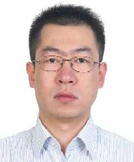
Jianrui Miao, Associate Professor and Doctoral Supervisor, focuses on optimization and simulation of railway transport organization. Leading one sub-project under the National Key Technology R&D Program, he has participated in over 30 railway transportation organization technology research and development projects, published four academic papers, and received two provincial-level scientific progress awards.

Zhengwen Liao, Lecturer at the School of Traffic and Transportation, specializes in railway transport capacity analysis and resource allocation optimization. Over the past five years, he has published over ten academic papers in top domestic and international transportation journals, holds three invention patents, and is currently leading one task under the National Key R&D Program. He has also received a Second-Class China Railway Society Science and Technology Award and a First-Class Beijing Railway Bureau Scientific Progress Award.
3.Research Achievements (Click to play video)
(1) Research Projects
[1] National Natural Science Foundation of China – Joint Fund Project: Mechanism and Adaptive Enhancement Methods for Elastic Collaborative Generation of Timetables in High-Speed Railway Networks
[2] National Key R&D Program of China: Rapid Early Warning and Induced Route Reconstruction for Cascading Large-Scale Passenger Flows in Rail Networks
[3] National Natural Science Foundation of China – Youth Fund Project: Multi-Level Asynchronous Collaborative Optimization Method for Train Rescheduling in High-Speed Railway Networks
[4] Beijing Natural Science Foundation – Fengtai Joint Fund for Frontier Research in Rail Transit: Key Technologies for Integrated Scheduling and Transport Organization Oriented Toward Passenger Travel under the Integration of Four Transport Networks
[5] Multiple Science and Technology R&D Programs of China State Railway Group Co., Ltd.
[6] Institute of Computing Technologies, China Academy of Railway Sciences Corporation Limited: Technical Services for Automatic Emergency Train Rescheduling in Beijing, Chengdu, and Hohhot Railway Bureaus
[7] Science and Technology R&D Programs of Shenyang, Shanghai, Lanzhou, and other regional railway bureau groups
(2) Representative Publications
[1]Long S, Meng L, Wang Y, et al. Integrated speed modeling and traffic management to precisely model the effect and dynamics of temporary speed restrictions to high-speed railway traffic[J]. Transportation research part C: emerging technologies, 2023, 152: 104148.
[2]Wang Y, Zhu S, D’Ariano A, et al. Energy-efficient timetabling and rolling stock circulation planning based on automatic train operation levels for metro lines[J]. Transportation Research Part C: Emerging Technologies, 2021, 129: 103209.
[3]Hong X, Meng L, D'Ariano A, et al. Integrated optimization of capacitated train rescheduling and passenger reassignment under disruptions[J]. Transportation Research Part C: Emerging Technologies, 2021, 125: 103025.
[4]Liao Z, Li H, Miao J, et al. Railway capacity estimation considering vehicle circulation: Integrated timetable and vehicles scheduling on hybrid time-space networks[J]. Transportation Research Part C: Emerging Technologies, 2021, 124: 102961.
[5]Luan X, De Schutter B, Meng L, et al. Decomposition and distributed optimization of real-time traffic management for large-scale railway networks[J]. Transportation Research Part B: Methodological, 2020, 141: 72-97.
[6]Meng L, Zhou X. An integrated train service plan optimization model with variable demand: A team-based scheduling approach with dual cost information in a layered network[J]. Transportation Research Part B: Methodological, 2019, 125: 1-28.
[7]Luan X, Wang Y, De Schutter B, et al. Integration of real-time traffic management and train control for rail networks-Part 2: Extensions towards energy-efficient train operations[J]. Transportation Research Part B: Methodological, 2018, 115: 72-94.
[8]Luan X, Wang Y, De Schutter B, et al. Integration of real-time traffic management and train control for rail networks-part 1: Optimization problems and solution approaches[J]. Transportation Research Part B: Methodological, 2018, 115: 41-71.
[9]Luan X, Corman F, Meng L. Non-discriminatory train dispatching in a rail transport market with multiple competing and collaborative train operating companies[J]. Transportation Research Part C: Emerging Technologies, 2017, 80: 148-174.
[10]Luan X, Miao J, Meng L, et al. Integrated optimization on train scheduling and preventive maintenance time slots planning[J]. Transportation Research Part C: Emerging Technologies, 2017, 80: 329-359.
[11]Meng L, Zhou X. Simultaneous train rerouting and rescheduling on an N-track network: A model reformulation with network-based cumulative flow variables[J]. Transportation Research Part B: Methodological, 2014, 67: 208-234.
[12]Meng L, Zhou X. Robust single-track train dispatching model under a dynamic and stochastic environment: A scenario-based rolling horizon solution approach[J]. Transportation Research Part B: Methodological, 2011, 45(7): 1080-1102.
(3) Awards
[1] First-Class Award in Natural Science, Ministry of Education (2015)
[2] Zhan Tianyou Science and Technology Innovation Team Award (2024)
[3] Second-Class (2022) and Third-Class (2013) Railway Science and Technology Awards, China Railway Society
[4] First-Class Science and Technology Award, China Railway Shanghai Group (2023)
(4) Patents
[1] Zhengwen Liao, Jianrui Miao, Lingyun Meng, et al. A Method for Automatic Train Operation Adjustment
[2] Jianrui Miao, Weining Hao, Yun Bao, et al. An Optimization Method for Train Operation Adjustment under Fixed Train Line Sequence
[3] Lingyun Meng, Jianrui Miao, Baoxu Li, et al. A Train Operation Planning Method Considering Enterprise Demand
[4] Lingyun Meng, Yihui Wang, Jianrui Miao, et al. A Method for Calculating Track Section Locking Time of Trains Based on Quasi-Moving Block
[5] Ying Wang, Jinchuan Zhang, Jianrui Miao, et al. Optimization Method and Apparatus for Adjusting High-Speed Railway Crew Scheduling Plans under Typical Scenarios
4.Team Contact Information
Contact Person: Zhengwen Liao
Email: 10141@bjtu.edu.cn
