On July 31, the School of Traffic and Transportation at Beijing Jiaotong University (BJTU) successfully hosted a visiting delegation from Delft University of Technology (TU Delft) in the Netherlands. As one of the key activities deepening cooperation between the two universities in the field of transportation engineering, this visit aimed to broaden academic horizons and promote cross-cultural exchanges between Chinese and Dutch institutions in the history of rail transit, technological evolution, and cutting-edge automotive industry. The delegation toured the BJTU Transportation Science Museum and the Xiaomi Automobile Super Factory, embarking on a deep-practice journey from theoretical exploration to the industry front line.
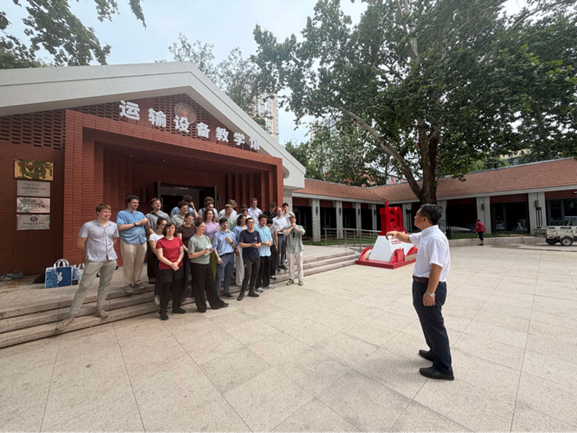
The first stop of the delegation was the BJTU Transportation Science Museum. This museum serves not only as a teaching facility but also as a micro-museum of China's railway development and railway-related knowledge.
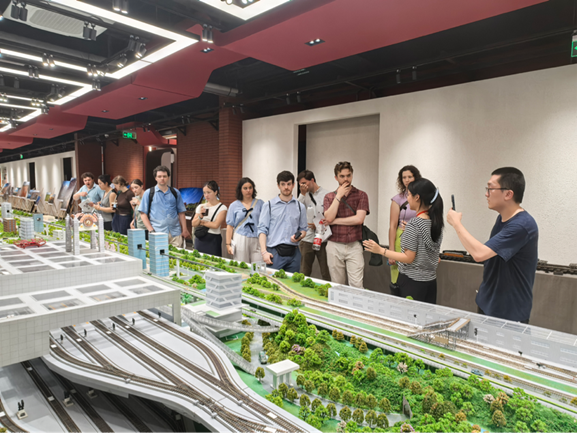
Inside the museum, the guide first led everyone through a century of vicissitudes in China's transportation history. The group then delved into the core field of railway engineering: with physical models on display, the guide provided a detailed breakdown of the structural differences and applicable scenarios between ballasted track and ballastless track, and demonstrated the track-switching principles of turnouts on site, making abstract track engineering knowledge tangible.
In the signal control exhibition area, the delegation witnessed the technological leap from the earliest semaphore signals and mechanically controlled color-light signals to the four-aspect automatic block system. To visually present the complex railway network logic, everyone gathered around a large-scale transportation scenery sandbox, learning the full process from freight train loading to departure, and observing multiple transportation scenarios including monorail railways, highways, and maritime shipping. The Dutch students quickly took out their phones to record the experience and engaged in lively discussions about the differences between Chinese and European transportation systems.
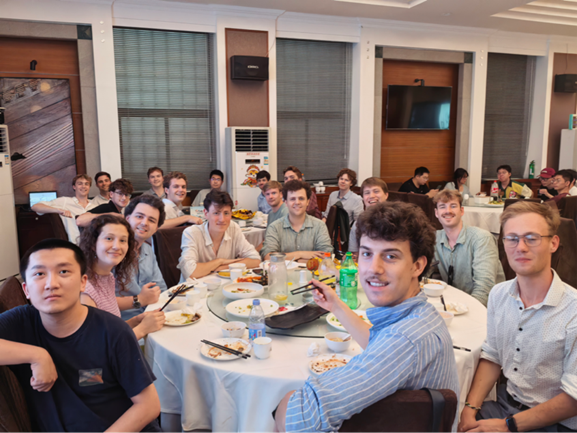
Leaving the equipment museum at noon, the delegation experienced an authentic campus lunch at the Red Orchard Restaurant, which introduced them to Chinese dining culture and opportunities for group photos. The students then strolled across the sun-filled campus and visited teaching buildings and major landmarks, experiencing the rich historical heritage and academic atmosphere of Beijing Jiaotong University.
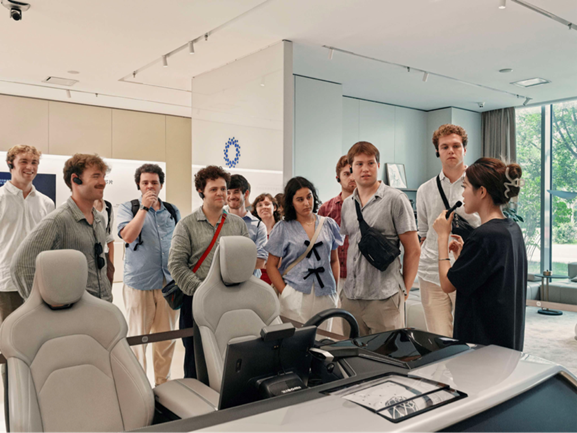
In the afternoon, the delegation headed to the Xiaomi Automobile Super Factory in the Beijing Economic-Technological Development Area, where they experienced the core strength of China's new energy vehicle industry firsthand.
Entering the exhibition hall, the latest Xiaomi cars immediately captured everyone's attention. What drew the most interest was the on-board "Xiao Ai" AI model. A staff member demonstrated how to control the vehicle's operating system through voice commands and even remotely control household appliances in real time. This scenario of "connecting car and home" gave the Dutch students a new, tangible understanding of mobility in an era of interconnected smart devices.
In the highly technological exhibition area, the students long lingered, attracted by the precision industrial exhibits on display. In the body structure display area, using the actual body frame and overall model with high-precision suspension, the guide systematic introduced concepts such as lightweight design and passive safety structure optimization in modern automobiles, including material selection and structural design. In the electric motor technology area, the delegation gained an intuitive understanding of the overall system architecture through detailed cutaway stator and rotor components, including highly integrated cooling solutions and advanced electromagnetic design structures. The direct presentation of these forefront technologies impressed the visiting Dutch postgraduate students and sparkled in-depth technical discussions with them on topics such as material applications and electric drive technology.
From the railway signals carrying rich historical heritage to the smart electric motors glowing with future promise, the TU Delft delegation's visit to BJTU was not only a deep exploration of China's transportation development journey but also an experience touching the frontiers of technology, and an intellectual exchange bridging the divides between Chinese and Western technological cultures. It is our belief that this valuable experience will not only deepen the friendship between the students of both universities but also promote future mutual research and joint progress in the frontier field of transportation.
